

The Biochemistry of Enzymes: Lock-and-Key Catalysis
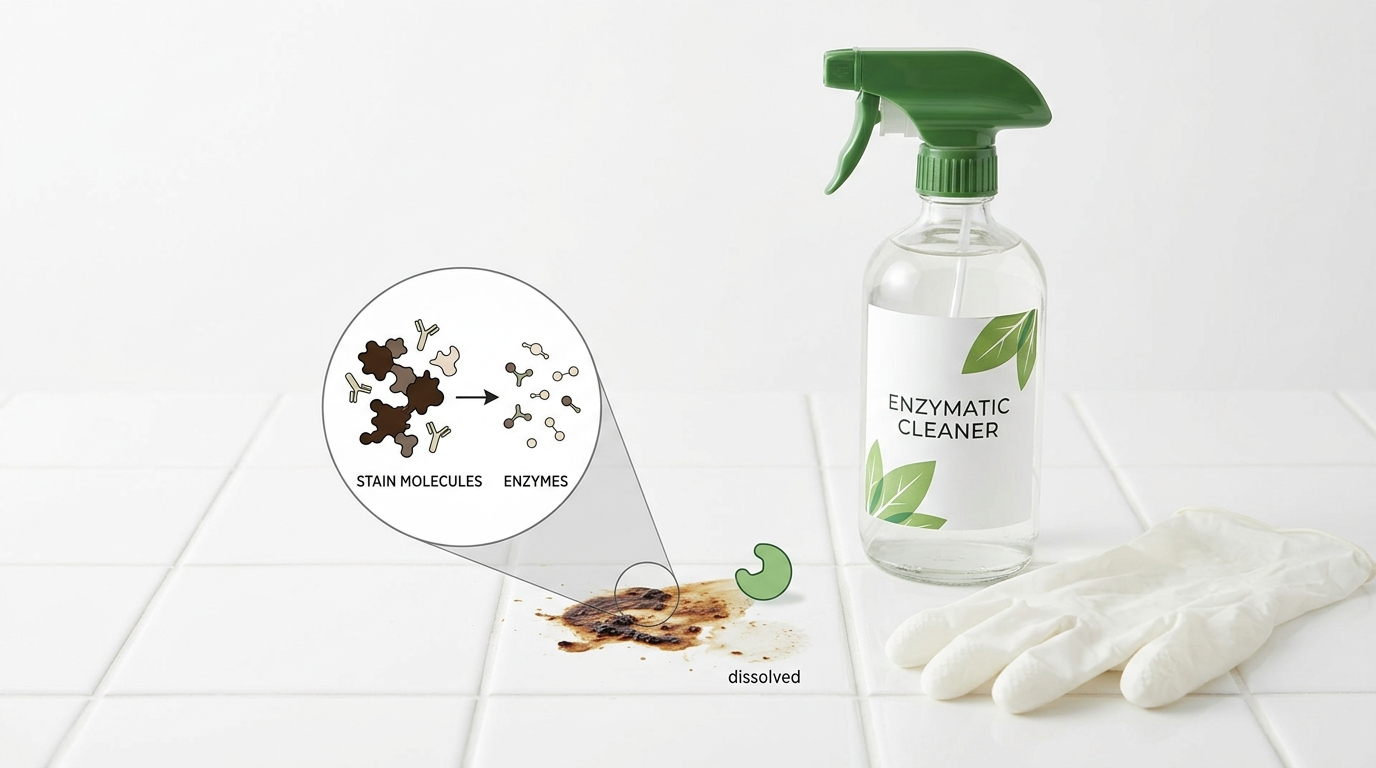
Enzymes are specialised globular proteins that function as biological catalysts, accelerating chemical reactions without undergoing permanent alterations themselves (Biochemical Journal). They speed up reaction rates by lowering the activation energy required to break chemical bonds. Each enzyme exhibits absolute substrate specificity, meaning it only reacts with a particular type of molecular target. The classic lock-and-key model describes this biochemical phenomenon. The enzyme’s active site precisely matches the geometric shape of the target substrate molecule (Journal of Biological Chemistry).
Commercial enzymatic cleaners typically combine multiple enzyme classes to address complex organic soils, which contain mixtures of proteins, fats, carbohydrates, and metabolic byproducts.
1. Proteases (Protein Degradation)
These enzymes catalyse the hydrolysis of peptide bonds in protein molecules, breaking them down into soluble amino acids and peptides (Journal of Surfactants and Detergents). Proteases target proteinaceous soils such as blood, meat residues, egg, grass, and salivary proteins. Without protease activity, protein-based deposits dry into highly insoluble films that strongly bind to fabric and carpet fibres.
2. Lipases (Lipid Degradation)
Lipases target water-insoluble lipids, fatty acids, and greasy residues. They catalyse the hydrolysis of ester bonds in triglycerides, breaking them down into free fatty acids and glycerol (Enzyme and Microbial Technology). This action removes sebum, cooking oils, and cosmetic grease stains. Because grease acts as a hydrophobic barrier, lipases are critical for exposing underlying soils to other cleaning agents.
3. Amylases (Starch Degradation)
These enzymes break down starch-based soils. Amylases hydrolyse the alpha-1,4-glucosidic bonds in complex carbohydrates, reducing starches into simple, soluble sugars like glucose and maltose (Applied Microbiology and Biotechnology). They effectively remove pasta, gravy, chocolate, and sauce stains. Since starches act as adhesives that trap dust and dirt, amylases prevent treated areas from rapidly re-soiling.
4. Uricases (Uric Acid Degradation)
Uricase is the critical enzyme for resolving pet urine odours. Mammalian urine contains uric acid, an insoluble organic compound that binds to carpet fibres and resists standard household detergents. Uricase catalyses the oxidation of uric acid into allantoin, a highly water-soluble compound that washes away easily (Journal of Biological Chemistry). By targeting the insoluble uric acid crystals, uricases eliminate the core molecule responsible for odour reactivation during humid weather.
Summary of Enzyme Action Mechanisms
To assist in visualising these biological reactions, the following comparison matrix details how each enzyme class targets specific organic soils:
| Enzyme Class | Primary Target (Substrate) | Breakdown Product | Scientific Source Citation |
|---|---|---|---|
| Protease | Proteins (blood, egg, milk, saliva) | Amino acids and peptides | (Journal of Surfactants and Detergents) |
| Lipase | Lipids and oils (sebum, grease, cooking fat) | Free fatty acids and glycerol | (Enzyme and Microbial Technology) |
| Amylase | Starches (pasta, gravy, baby food) | Soluble sugars (glucose, maltose) | (Applied Microbiology and Biotechnology) |
| Uricase | Uric acid crystals (pet urine deposits) | Allantoin and soluble byproducts | (Journal of Biological Chemistry) |
The Role of Moisture and Dwell Time in Biological Catalysis
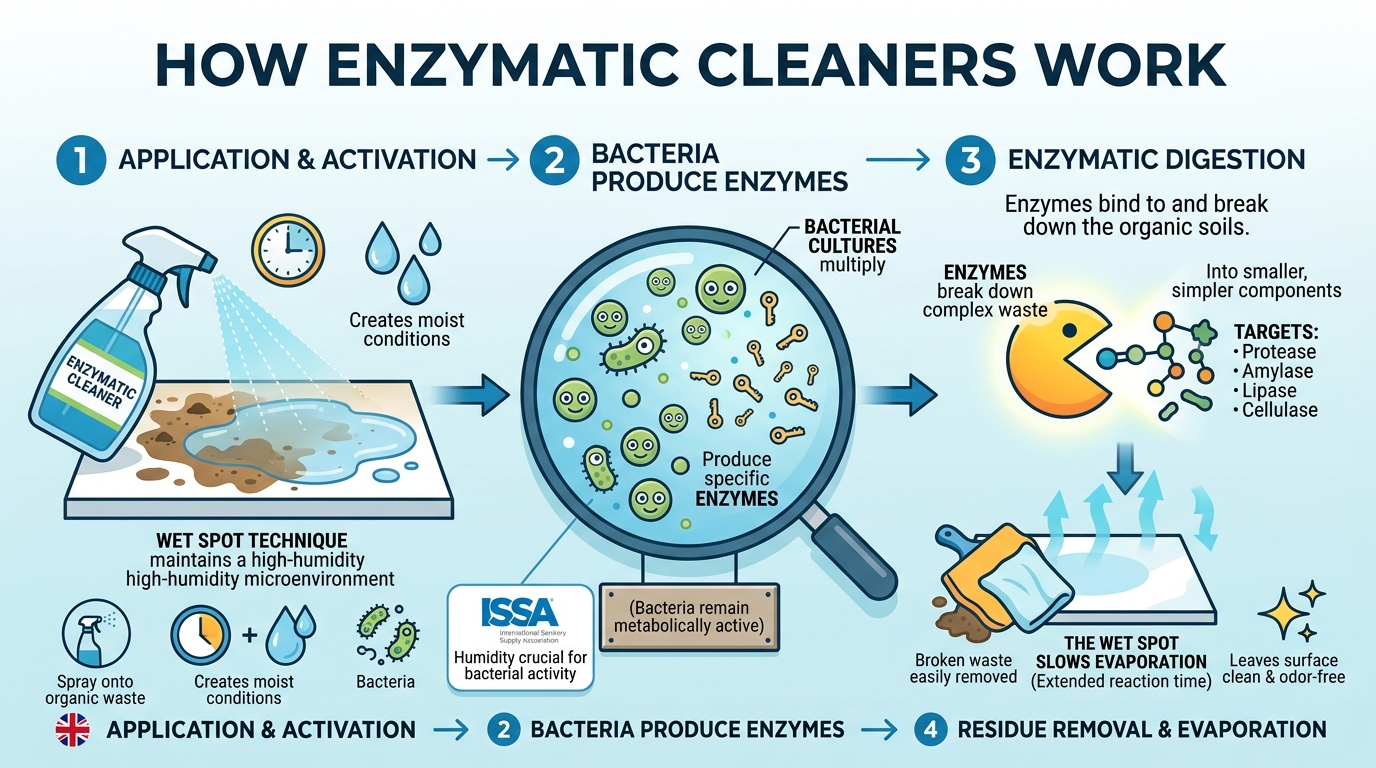
Unlike chemical cleaners that react almost instantaneously, enzymatic cleaners require a sustained period of moisture to operate. Because enzymes are dissolved proteins, they require water molecules to transport themselves and bind to the target organic substrate (Carpet and Rug Institute). If the cleaning solution dries out prematurely, the biochemical reaction halts immediately, leaving partially digested residues behind. To restart the process, the area must be re-wetted, though this can disrupt the bacterial spores’ lifecycle.
Documented dwell-time requirements vary according to the severity and depth of the contamination. For light, superficial stains on hard surfaces, a dwell time of 15 to 30 minutes is sufficient for enzyme contact. Deeply embedded pet odours in carpet underlayment demand an extended dwell time of 8 to 24 hours (Pet Care Science Association). During this extended period, the underlying bacterial spores germinate and continuously synthesise new enzymes to digest the deep-seated organic material.
To prevent premature evaporation during long dwell times, cleaning experts recommend covering the treated area. Placing a damp, clean microfibre cloth or a sheet of plastic film over the wet spot slows evaporation. This technique maintains the high-humidity microenvironment that bacterial cultures need to remain metabolically active (International Sanitary Supply Association).
Substrate Limits: Where Enzymatic Cleaners Must Never Be Used
While biological cleaners offer excellent safety profiles for many surfaces, their biochemical properties impose strict substrate limitations. Because proteases are engineered to hydrolyse proteins, they cannot distinguish between organic stains and protein-based textile fibres (The Carpet and Rug Institute). Applying protease-rich formulas to natural protein luxury fibres causes severe and irreversible structural degradation.
Natural protein-based materials include wool, silk, and genuine leather. Wool consists of keratin proteins, while silk is composed of fibroin proteins (Textile Research Journal). When exposed to active proteases, these fibres undergo microscopic thinning and structural weakening. Over time, this biological digestion leads to fibre breakage, loss of tensile strength, and permanent fabric thinning. Similarly, leather contains collagen proteins, which degrade and crack under enzymatic action.
Porous stone and unsealed timber also present compatibility risks. Unsealed natural stones like marble, limestone, and travertine can absorb the liquid carrier and bacterial spores. This absorption can lead to internal bacterial colonisation or organic staining within the stone matrix. Unsealed hardwood floors can absorb moisture during long dwell times, leading to wood swelling, warping, and joint separation (International Sanitary Supply Association).
Safety Caveats: Human, Pet, and Bacterial Handling Protocols
Although enzymatic cleaners are generally safer than volatile solvents or strong acids, they still require careful handling. Active enzymes (especially proteases) can digest the keratin proteins present in human and animal skin. Prolonged or repeated dermal contact can cause irritation, redness, or contact dermatitis (Health and Safety Executive). Users should wear protective gloves during application and wash any accidental splashes immediately with fresh water.
Inhalation of aerosolised enzymes poses another significant respiratory health risk. When enzymatic cleaners are sprayed as a fine mist, they can trigger respiratory sensitisation or asthma-like reactions in sensitive individuals (European Chemicals Agency). To minimise this hazard, manufacturers recommend using coarse trigger sprays rather than high-pressure aerosols. Users should also ensure active room ventilation by opening windows and doors during and after treated applications.
Pet households must observe strict isolation protocols while treated areas remain wet. Domestic animals can walk across wet areas, absorbing surfactants and active chemicals through their paw pads. Dogs and cats may then ingest these substances during self-grooming, leading to gastrointestinal distress or chemical poisoning. Keep pets entirely excluded from treated zones until the surface has dried completely.
Storage and Temperature: Maintaining Biological Viability
Enzyme performance and bacterial viability are heavily dependent on environmental temperature and storage conditions. Because enzymes are folded proteins, they are highly sensitive to thermal denaturation. Most cleaning enzymes maintain stable activity between 15°C and 35°C, making standard room temperature optimal (Association of Cleaning Science). Exposure to temperatures exceeding 45°C causes the protein chains to unfold, permanently inactivating the enzyme. At temperatures above 60°C, biological activity ceases entirely.
Conversely, cold environmental temperatures dramatically slow down the catalytic rate of enzymes. When temperatures drop below 10°C, the kinetic energy of the system decreases, reducing enzyme-substrate collisions (Enzyme and Microbial Technology). While freezing does not permanently destroy the enzymes, it suspends their activity. Homeowners should store enzymatic products in climate-controlled areas rather than cold outbuildings or uninsulated garages.
Chemical compatibility represents another critical factor for enzymatic effectiveness. Mixing enzymatic cleaners with traditional chemical disinfectants like bleach, hydrogen peroxide, or quaternary ammonium compounds immediately denatures the active enzymes. These strong chemicals also kill the beneficial bacteria that synthesise new enzymes on-site (Journal of Surfactants and Detergents). To avoid neutralising the biological formula, users must never combine enzymatic cleaners with other chemical products.
Scientific Verdict: The Value of Biological Cleaning
Based on our evaluation of biological action mechanisms, we conclude that enzymatic cleaners represent an invaluable tool for modern household hygiene. Their ability to target and permanently decompose complex organic soils at the molecular level far surpasses the capabilities of masking fragrances or surface surfactants alone. However, achieving successful results requires strict adherence to their biological requirements. By respecting temperature limits, providing adequate wet dwell times, and avoiding incompatible surfaces, users can harness the full catalytic potential of these advanced cleaning solutions.