

The preparation of food releases a complex mixture of heat, steam, and airborne chemical compounds into the domestic environment. While some of these aromas are pleasant during the cooking process, their subsequent degradation and persistence within the living spaces can become a significant challenge. In modern residential layouts, particularly open-plan flats and houses where the kitchen shares an undivided air volume with the living area, cooking vapours travel quickly and settle onto surrounding materials. Soft furnishings (such as curtains, carpets, rugs, upholstered sofas, and fabric lampshades) are particularly susceptible to absorbing these compounds, acting as environmental sinks that trap and slowly re-emit stale kitchen odours over days, weeks, or even months.
This phenomenon is not merely an aesthetic concern. The persistence of cooking odours can affect the perceived air quality and comfort of a home, and in some cases, it can indicate insufficient ventilation or structural issues that require systematic intervention. Removing these smells permanently is not a matter of masking them with aerosolised perfumes or synthetic fragrances. Instead, it requires an evidence-based approach grounded in the physical and chemical principles of ventilation, material science, and molecular adsorption. By understanding how cooking byproducts interact with different textile fibres and using scientifically proven cleaning techniques, occupants can maintain a fresh and healthy indoor environment without damaging delicate household fabrics (Building Research Establishment).
The Science of Cooking Odours: Why Textiles Retain Smells
To address cooking odours effectively, one must first understand their chemical composition and the mechanisms by which they adhere to textiles. Cooking is essentially a series of high-temperature chemical reactions, including lipid oxidation, pyrolysis, and the Maillard reaction. These reactions produce a wide range of Volatile Organic Compounds (VOCs) that escape into the air. These include aldehydes (associated with frying oils), ketones, heterocyclic amines (associated with cooked meats), and volatile sulfur compounds (associated with garlic, onions, and cruciferous vegetables) (Royal Society of Chemistry).
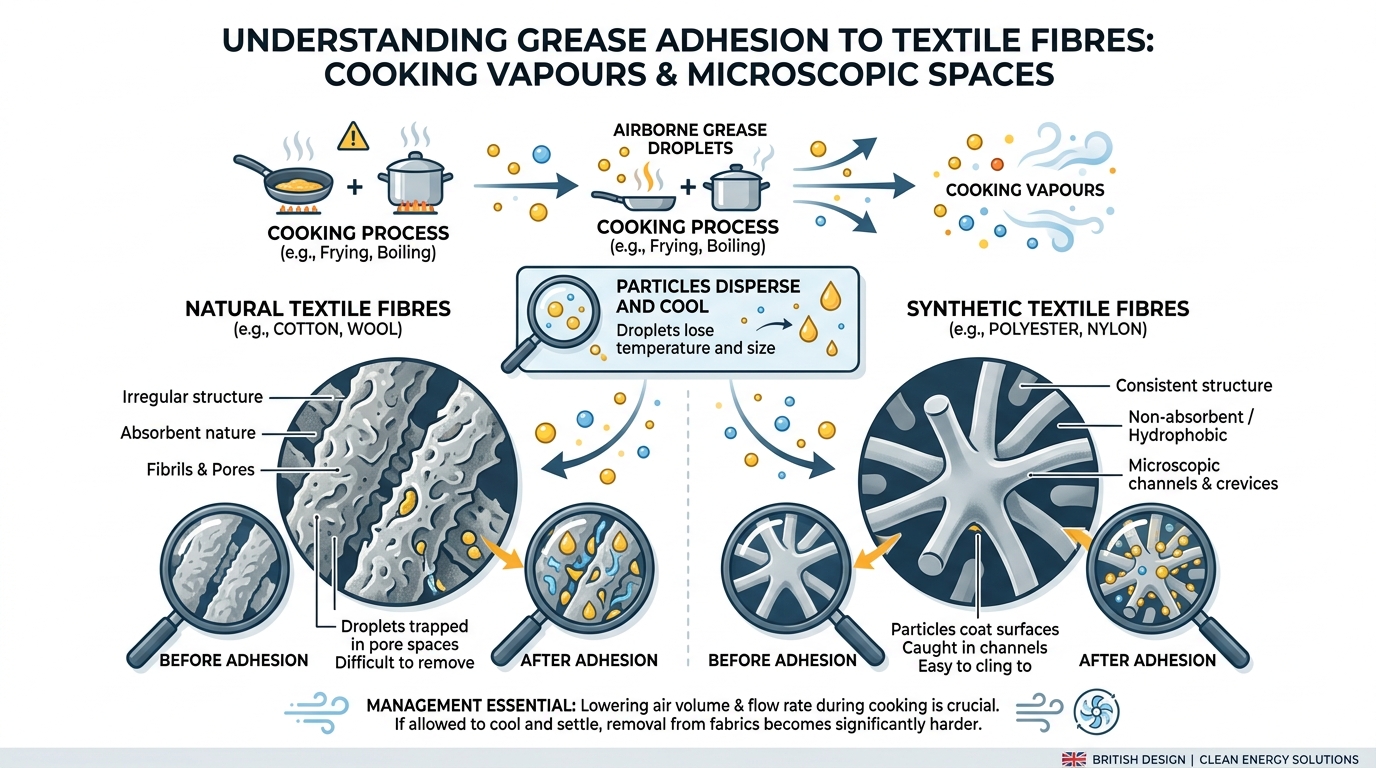
These airborne compounds do not exist in isolation. During cooking, particularly frying, roasting, or boiling, water vapour and lipid droplets become aerosolised. These microscopic grease droplets carry the volatile odour compounds throughout the room. As the warm, moisture-laden air cools, it moves toward colder surfaces, including walls, windows, and soft furnishings. When this air comes into contact with textiles, the aerosolised lipids and water droplets condense, depositing the odour-carrying molecules directly onto and into the fabric structure.

The rate and strength of this deposition depend heavily on the chemical composition of the textile fibres:
Natural Fibres (Cotton, Wool, Linen, Silk): Natural fibres are generally hydrophilic (water-attracting) and highly porous. They possess a high moisture regain, meaning they naturally absorb water vapour from the air. When water-soluble cooking vapours (such as those containing steam, organic acids, or light aldehydes) enter the indoor atmosphere, they are drawn into the interior structure (the lumen or medulla) of natural fibres. Wool is particularly absorbent due to its complex keratin structure and high concentration of amino acids, which can form hydrogen bonds with polar odour molecules (Textile Institute). This allows natural fibres to hold a large volume of odour compounds, but because these compounds are water-soluble, they can often be released through controlled humidity or washing.
Synthetic Fibres (Polyester, Nylon, Acrylic, Polypropylene): Synthetic fibres present a very different chemical challenge. These fibres are hydrophobic (water-repelling) but lipophilic (fat-attracting). Polyester, for example, is composed of long-chain polymer esters that have a strong chemical affinity for non-polar molecules, such as the lipids and fatty acids present in aerosolised cooking grease. When microscopic grease droplets settle on a polyester sofa or acrylic curtains, they do not remain on the surface; instead, they dissolve into the lipophilic structure of the synthetic polymer itself, creating a stable chemical bond (Journal of Textile Science). This makes synthetic soft furnishings extremely efficient at trapping grease-based cooking smells, and because these lipids are insoluble in water, conventional water-based cleaning methods are often ineffective at removing them.
Over time, these trapped lipids undergo further oxidation when exposed to light and oxygen, a process similar to rancidification. This oxidation breaks the larger, less volatile fats down into smaller, highly volatile, and foul-smelling compounds like butyric acid and hexanal. This explains why a sofa may smell increasingly stale weeks after the actual cooking took place.
Ventilation and Passive Prevention: Controlling the Air Exchange Rate
The primary defence against cooking odours settling on soft furnishings is effective source control and ventilation. Once grease aerosols and volatile organic compounds are allowed to disperse into the room and cool, their removal from fabrics becomes significantly more difficult. Therefore, managing the air volume and flow rate during the cooking process is essential.
Ventilation works primarily through dilution and extraction. The efficiency of this process is measured by the Air Exchange Rate (AER) or Air Changes per Hour (ACH), which defines how many times the total volume of air in a room is replaced with fresh outdoor air within a one-hour period. For domestic kitchens, the UK Building Regulations Part F recommends a minimum mechanical extraction rate of 30 litres per second when located directly adjacent to a cooker hob, or 60 litres per second if the extraction hood is located elsewhere in the room (UK Building Regulations Part F). In open-plan flats, where the kitchen and living areas are merged, a higher air exchange rate is required to prevent vapours from drifting into the living zone where soft furnishings are situated.
There are two primary types of mechanical kitchen extraction:
Ducted Extraction: This system pulls air from above the cooker and expels it directly outside through ductwork. This is the most effective method for removing heat, moisture, steam, and aerosolised grease from the home. By creating negative pressure in the kitchen area, ducted extraction draws air from the surrounding rooms, preventing cooking vapours from migrating toward upholstered sofas and curtains.
Recirculation Hoods: In many modern flats, particularly those where external venting is structurally impossible, recirculation hoods are used. These hoods pull air through filters and blow it back into the room. While they do not reduce moisture or heat, they can be highly effective at capturing grease and odours if maintained correctly. A recirculation hood relies on a dual-filtration system:
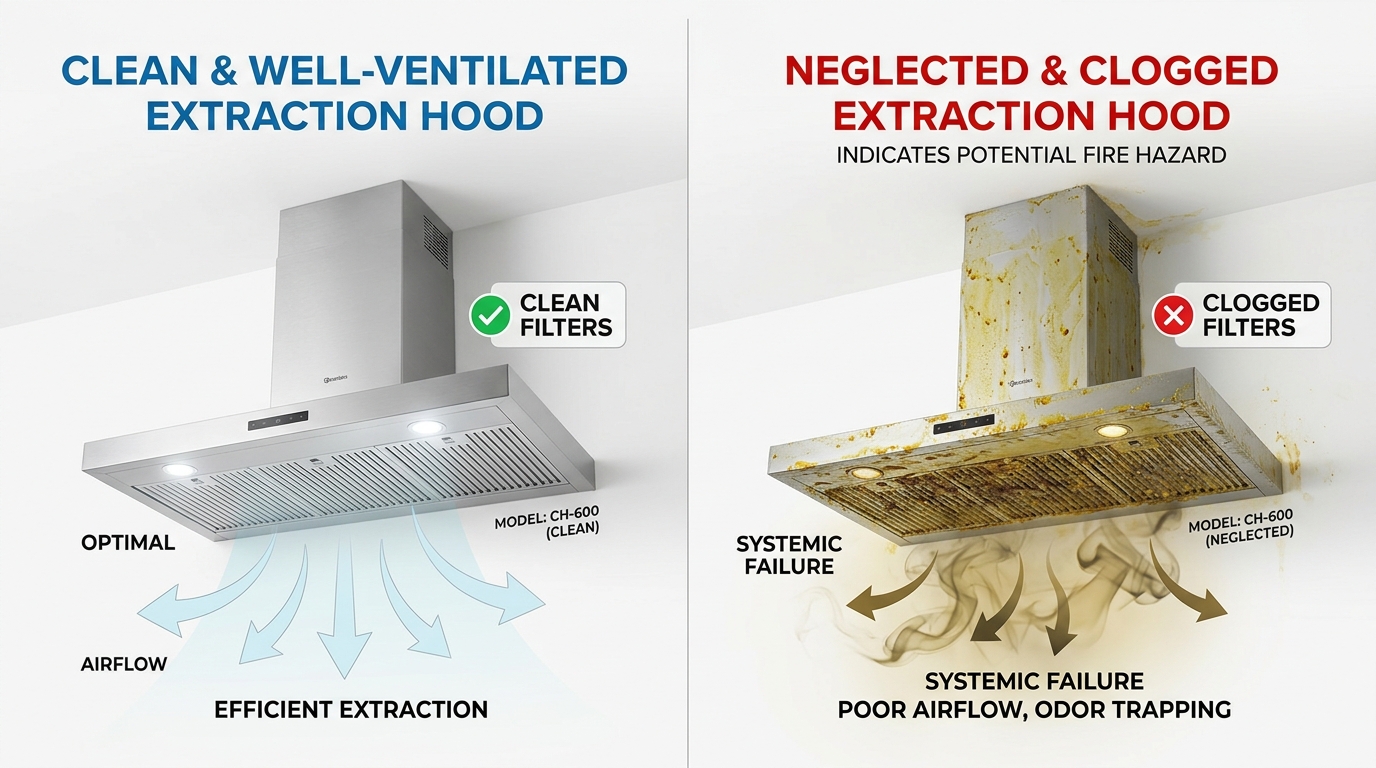
- Grease Filters: Usually made of metal mesh or fleece, these filters rely on physical impingement to trap aerosolised grease droplets. If these filters are clogged, grease-laden air bypasses them, allowing fat particles to settle directly onto surrounding soft furnishings.
- Active Carbon (Charcoal) Filters: Active carbon works through a process called physical adsorption (physisorption). Active carbon is manufactured to have an incredibly high surface area, often exceeding 1,000 square metres per gram, containing millions of microscopic pores (Chartered Institution of Building Services Engineers). When volatile organic cooking compounds (such as sulfur-based methyl mercaptans or nitrogen-based amines) pass through the carbon bed, they are trapped within these pores by weak intermolecular forces (Van der Waals forces).
Passive prevention also plays a critical role. Closing internal doors to bedrooms and living rooms during cooking confines the vapours to the kitchen, where they can be extracted at source. Keeping windows open slightly in the living area during cooking creates a cross-breeze, encouraging a rapid air exchange that sweeps lingering vapours out of the home before they can settle onto the fibres of rugs, curtains, or cushions.
Mechanical and Chemical Adsorption: Material-Safe Cleaning and Neutralisation
When preventive measures fail and cooking smells become embedded in soft furnishings, mechanical and chemical extraction methods are required to remove the odour-causing molecules without degrading the underlying fabric.
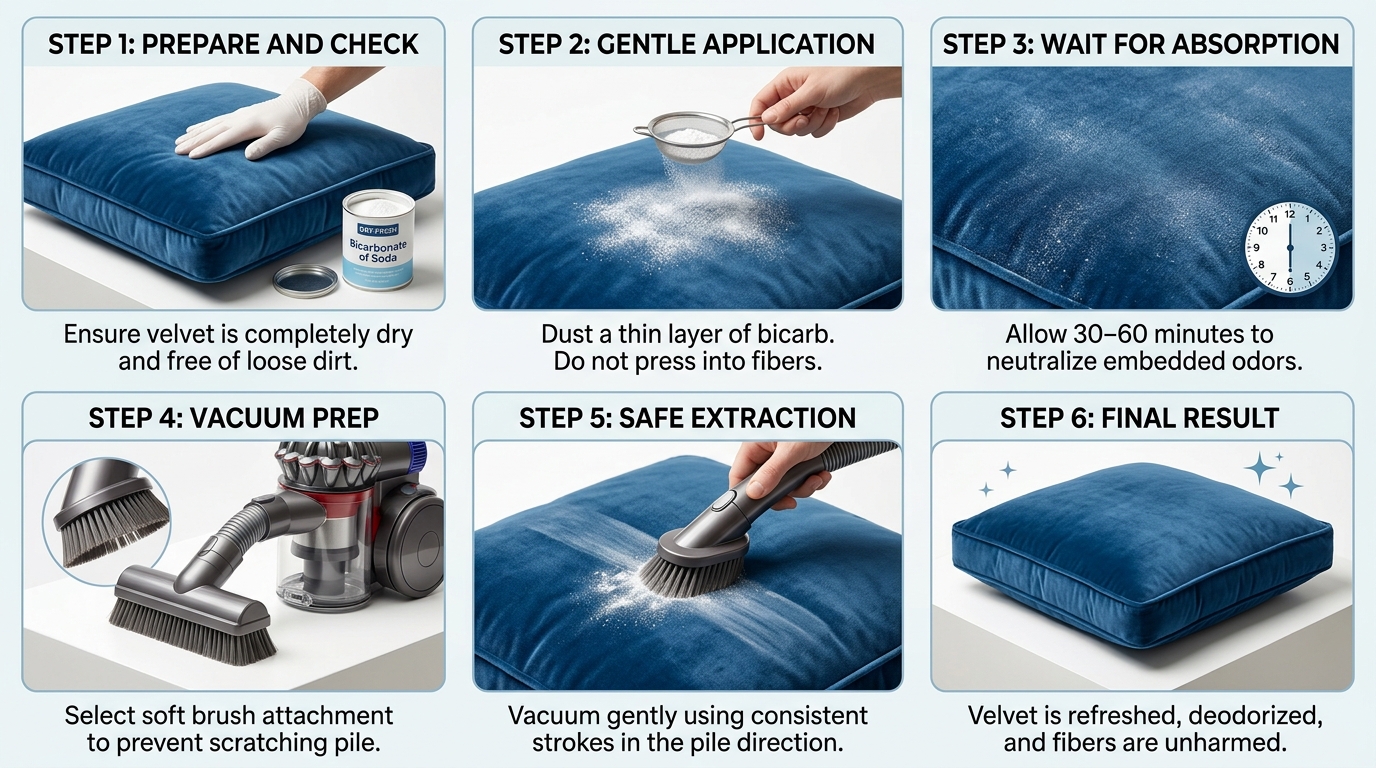
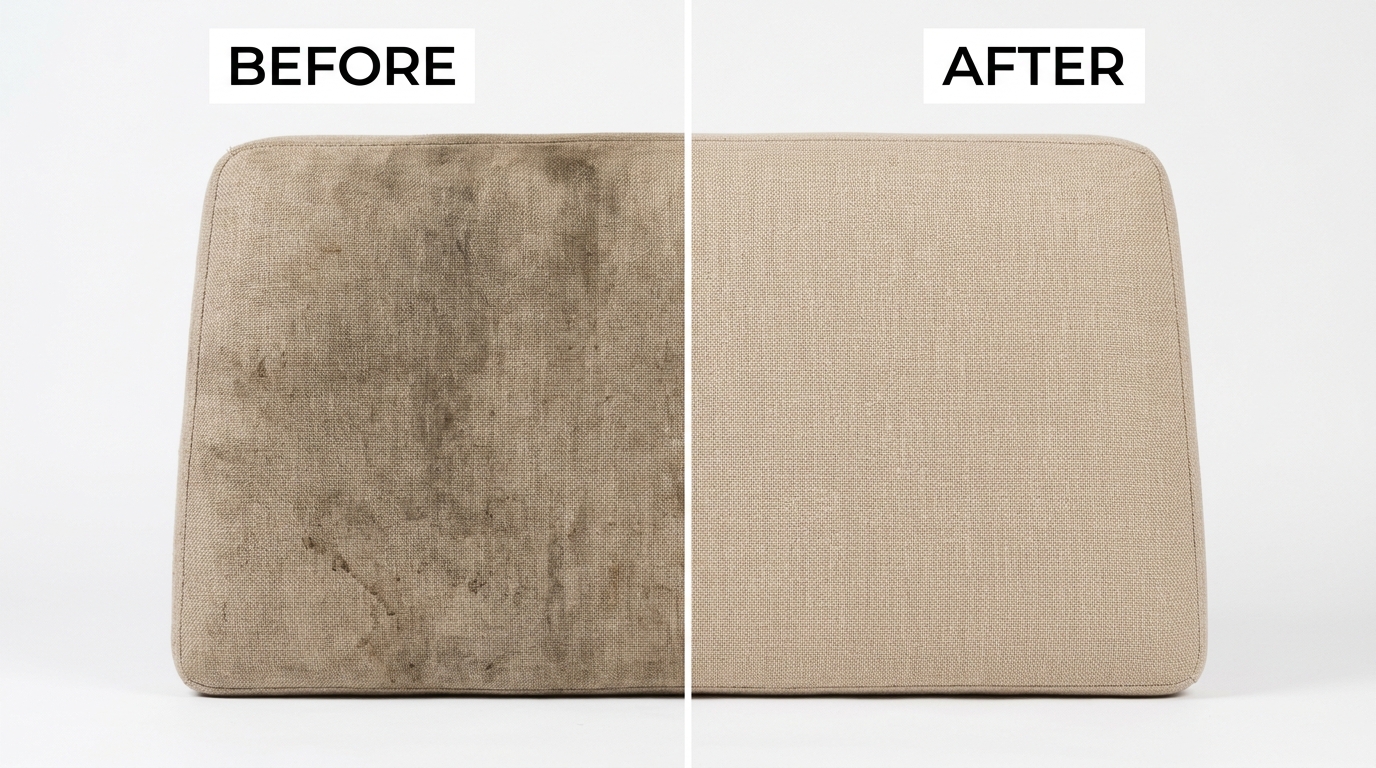
One of the most effective and material-safe dry treatments for soft furnishings is the application of sodium bicarbonate (bicarbonate of soda). Unlike synthetic room sprays that temporarily mask odours with perfumes, sodium bicarbonate eliminates smells through chemical adsorption and neutralisation. Sodium bicarbonate is an amphoteric compound, meaning it can act as either an acid or a base. Many common cooking odours are acidic (such as butyric acid from butter or acetic acid from vinegar) or basic (such as amines from fish). When dry sodium bicarbonate is distributed over a fabric, it reacts chemically with these volatile compounds, converting them into stable, non-volatile, and completely odourless sodium salts (Royal Society of Chemistry).
Furthermore, sodium bicarbonate possesses a high surface-to-volume ratio, allowing it to physically adsorb aerosolised lipids and moisture trapped between fabric fibres. For optimal results, the powder must be worked gently into the textile pile using a soft-bristled brush and left to dwell for a minimum of 12 to 24 hours. This extensive dwell time is necessary to allow the dry reaction to complete. Once the dwell period is finished, the powder, now holding the neutralised salts and adsorbed oils, must be thoroughly removed using a vacuum cleaner equipped with a High-Efficiency Particulate Air (HEPA) filter and an upholstery brush attachment to prevent the fine powder from being re-released into the indoor air.
For deeper grease contamination, particularly on lipophilic synthetic fibres, wet cleaning may be required. However, before applying any liquid treatment, one must identify the fabric’s composition and consult its professional care code, which is standard on UK upholstery:
- Code W (Wet): The fabric can be safely cleaned with water-based agents.
- Code S (Solvent): The fabric must only be cleaned with dry-cleaning solvents. Water will cause water-spotting, shrinkage, or fibre distortion.
- Code WS (Wet/Solvent): The fabric can tolerate both water-based and solvent-based cleaners.
- Code X (Dry Vacuum Only): The fabric is highly delicate (such as certain silks or historic velvets) and must not be treated with any liquid or powder; professional restoration is required.
A common mistake in domestic cleaning is the premature use of steam cleaners. While steam (above 100 degrees Celsius) can sanitise surfaces, applying high-temperature steam to grease-laden or protein-rich cooking deposits can be highly counterproductive. The intense heat of the steam can denature and “cook” any proteins present (such as those from roasted meats or dairy), bonding them permanently to the textile fibres. It can also cause aerosolised grease to melt and penetrate deeper into the furniture backing and foam underlay, where it becomes effectively unreachable (Textile Institute). Steam cleaning should only be performed after the fabric has been thoroughly pre-cleaned of surface organic soils and grease.
For stubborn lipid-based odours that resist bicarbonate treatment, enzymatic cleaners containing lipases are highly effective. Lipases are specialised biological catalysts that target and break down ester bonds in lipids, converting hydrophobic oils and grease into water-soluble glycerol and fatty acids. These byproducts can then be blotted away with a clean microfibre cloth. Like all biological enzymes, they require a damp environment and moderate temperatures (between 15 and 35 degrees Celsius) to remain active, meaning the treated area must be kept covered with a damp towel to prevent premature drying (Journal of Applied Microbiology).
When Odour Signals a Broader Issue: Structural Gaps and Moisture
In some cases, cooking odours that persist despite rigorous cleaning and active ventilation can be a symptom of a broader structural issue within the property. Understanding when a smell is simply a temporary byproduct of cooking versus when it indicates a systemic failure is critical for maintaining home safety and structural integrity.
A primary concern in modern, highly insulated homes is interstitial condensation. When cooking, immense volumes of water vapour are released. If the mechanical extraction system is inadequate, this moisture raises the relative humidity of the indoor air. As this warm, humid air migrates through the living space, it seeks out cold surfaces. If it penetrates behind plasterboard, under floorboards, or into the structural cavities of external walls, it can condense into liquid water when it hits the dew point. This trapped moisture creates an ideal environment for the growth of mould (such as Aspergillus or Penicillium) and mildew, which produce a damp, musty odour that can blend with and intensify lingering cooking smells (World Health Organization).
Another structural source of persistent kitchen odours is grease accumulation within the mechanical ductwork. If grease filters in the extraction hood are neglected or absent, aerosolised fats will bypass the hood and condense on the cooler internal walls of the exhaust ducting. Over months or years, this creates a thick layer of oxidised, rancid fat that emits a continuous stale, oily smell that flows back into the living area when the system is inactive. More critically, this accumulated grease is highly flammable. Duct fires are a leading cause of structural fires in residential buildings, as the grease can easily be ignited by high heat or stray flames from the hob (Fire Protection Association).
Finally, bad odours can travel between flats in multi-family buildings through shared ventilation shafts or gaps around utility pipes (known as service risers). If the fire-stopping seals around these risers are degraded or missing, or if the communal extraction system lacks functioning backdraught dampers, cooking vapours from one flat can easily enter another. This represents both an olfactory nuisance and a breach of fire safety regulations, as these pathways can allow smoke and toxic gases to migrate between dwellings during a fire.
Frequently Asked Questions
Why do cooking smells seem worse on humid days?
Many cooking odour compounds and the fabrics that absorb them are hygroscopic, meaning they absorb moisture from the air. When indoor relative humidity rises, the water molecules displace the volatile organic compounds trapped within the porous structure of natural fibres like wool and cotton. This releases a fresh wave of odour molecules into the room, making stale cooking smells suddenly more noticeable even if no cooking has taken place recently.
Can steam cleaning damage delicate soft furnishings?
Yes, steam cleaning can cause permanent damage to several types of soft furnishings. The high temperature of the steam can melt or distort synthetic fibres like polyester and acrylic. It can also cause shrinkage or water-spotting on natural fibres like silk and wool. Crucially, if there are outstanding oily residues on the fabric, steam can “cook” and set these fats into the fibres, making the stain and the associated odour almost impossible to remove.
How often should active carbon filters in recirculation hoods be replaced?
Active carbon filters cannot be washed or regenerated at home and must be replaced regularly. For a standard household cooking moderately, carbon filters should be replaced every three to six months. If the filters are neglected, their pores become completely saturated with organic compounds, rendering them incapable of adsorbing further odour molecules. This results in cooking vapours circulating freely and settling on your soft furnishings.
Why do cooking odours persist even when kitchen doors are closed?
While closing doors restricts direct airflow, it does not create an airtight seal. Internal doors typically have gaps at the bottom (often 10 to 20 millimetres to allow for air circulation in homes with mechanical ventilation). Air currents driven by temperature differences (thermal buoyancy) will carry microscopic grease aerosols and vapours through these gaps. Additionally, if the kitchen is not under negative pressure from an extraction fan, the smells will eventually diffuse into the rest of the flat.
What is the safest way to treat silk or velvet soft furnishings?
Silk and certain velvets (particularly those made from viscose or silk) are highly sensitive to moisture and mechanical friction. Applying water-based cleaners or scrubbing these fabrics can permanently ruin their pile, texture, and colour. The safest course of action is to check the care label for Code S (solvent cleaning only) or Code X. If dry vacuuming with a soft brush attachment does not resolve the odour, professional solvent-based dry cleaning is required (Textile Institute).
Summary: A Systematic Approach to Odour Elimination
Eliminating cooking smells from soft furnishings requires a methodical approach that addresses the physical and chemical nature of the contamination. Rather than relying on temporary masking agents, occupants must prioritise robust mechanical ventilation, grease filtration, and active carbon adsorption to capture vapours at their source. When odours do penetrate fabrics, targeted chemical neutralisation using sodium bicarbonate or biological enzymatic cleaners can dismantle the compounds safely and permanently.
If persistent cooking smells resist these treatments, it is vital to investigate deeper structural possibilities, including clogged mechanical ductwork, inadequate property-wide ventilation, or interstitial condensation. By understanding the science of how food vapours interact with synthetic and natural textile fibres, maintaining a clean and fresh indoor environment becomes an achievable task, preserving both the comfort of the home and the lifespan of its soft furnishings.