
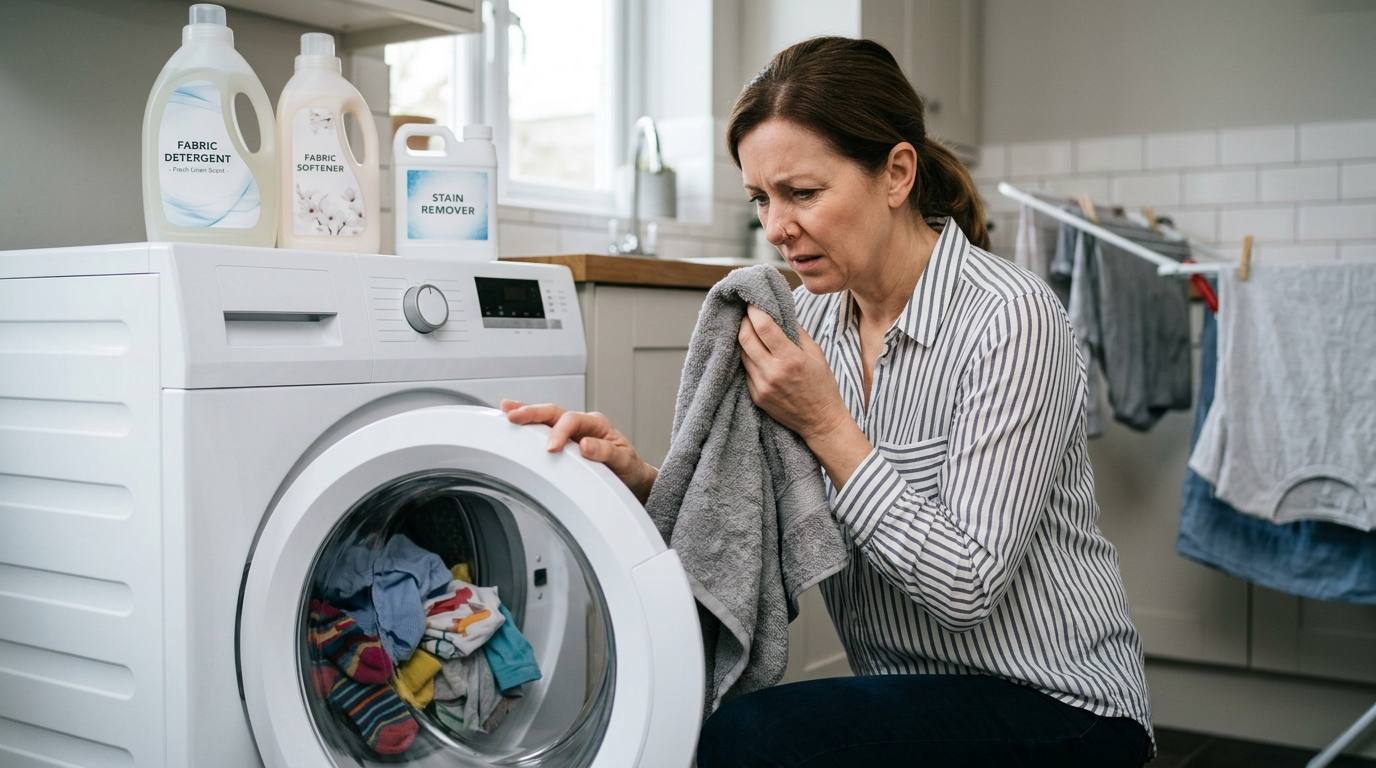

The Microbiology of Laundry Odour: Moraxella osloensis and Biofilms
Bacteria and fungi find ideal habitats inside modern washing machines and within damp fabric weave. Scientific research identifies Moraxella osloensis as the primary bacterial species responsible for generating persistent laundry malodour (Kubota et al., 2012). This Gram-negative, rod-shaped bacterium possesses high resistance to desiccation and standard laundering agents. Moraxella osloensis metabolises sebum, sweat lipids, and organic residues trapped within textile fibres. As it multiplies, the bacterium produces the volatile organic compound 4-methyl-3-hexenoic acid (Kubota et al., 2012). This specific chemical compound has an exceptionally low human odour detection threshold, releasing a pungent, sour smell.
Washing machines also harbour diverse microbial communities that form thick, resilient biofilms on internal components. These biofilms primarily colonise the rubber door bellows, the detergent drawer, and the outer wash tub (Nix et al., 2015). These areas provide constant moisture, warm temperatures, and a steady supply of organic nutrients. Common biofilm-forming microbes include Pseudomonas aeruginosa and various fungal yeasts, which construct a protective matrix of extracellular polymeric substances (Nix et al., 2015). This matrix shields the embedded microorganisms from standard wash cycles and mild chemical detergents. During the rinse cycle, water washes over these biofilms, detachment occurs, and suspended microbes recontaminate the clean fabrics.
The Detergent Residue Paradox: How Over-Washing Feeds Microbes
Many consumers use excess detergent and fabric softeners to combat lingering odours, which paradoxically worsens the problem. Modern liquid detergents contain high concentrations of anionic and non-ionic surfactants that require thorough rinsing. Fabric softeners employ cationic quaternary ammonium compounds to coat fibres and reduce static charge. When users exceed recommended dosages, the machine’s rinse cycle cannot fully remove these chemical agents. Instead, a sticky, microscopic residue layer builds up on the textile fibres and the inner drum. This residue layer serves as a strong physical anchor for bacterial adhesion and biofilm growth.
This accumulation of soap scum and fabric softener residue, chemically known as scrud, provides a direct source of nutrients. Biofilm-dwelling bacteria metabolise the fatty esters and fatty acids present in fabric softener formulations. Furthermore, the hydrophobic coating left by softeners traps human sebum, sweat lipids, and skin flakes within the weave. This lipid trap protects organic soils from water-soluble surfactants during subsequent wash cycles. The trapped organic matter undergoes slow bacterial decomposition, continually releasing volatile organic compounds. Eliminating this residue requires recalibrating detergent quantities and avoiding fabric softeners on highly absorbent textiles.
Fabric Chemistry: Why Synthetics Retain Odours
The chemical composition of modern apparel plays a decisive role in odour retention. Synthetic fibres such as polyester and nylon are synthesised from hydrophobic polymers. While cotton fibres absorb water and swell, synthetic fibres resist water absorption. However, synthetic polymers are highly lipophilic, meaning they exhibit a strong chemical affinity for lipids and oils. During physical exercise or daily wear, the body secretes sebum, sweat lipids, and fatty acids. These non-polar organic compounds establish strong hydrophobic bonds with the lipophilic synthetic fibres.
Standard laundry detergents struggle to release these chemically bound lipids under normal, low-temperature washing conditions. Water-soluble surfactants cannot easily penetrate the hydrophobic barrier to dissolve the locked lipids. Microorganisms such as Micrococcus and Moraxella thrive on these trapped lipids, metabolising them into pungent short-chain volatile fatty acids (Callewaert et al., 2014). This biological activity explains why polyester garments often retain a permanent stink, while cotton garments emerge fresh. To remove these locked lipids, laundering must utilise specialised lipolytic enzymes or active oxygen boosters. Refer to our detailed guide on how enzymes digest organic substrates enzymatic cleaners guide.
Drying Dynamics: Humidity and the Incubation Period
The laundering process does not end when the wash cycle finishes; the drying phase is equally critical. Damp fabrics left inside a closed washing machine drum provide an ideal, high-humidity incubation chamber. Even after a complete wash, small populations of desiccation-resistant bacteria survive on the fabric fibres. If drying occurs slowly in humid, unventilated indoor environments, these surviving microbes replicate rapidly. Moraxella osloensis uses this damp period to metabolise remaining organic residues, releasing volatile 4-methyl-3-hexenoic acid. This rapid microbial proliferation is the primary cause of the musty sour towel smell.
In contrast, rapid moisture removal disrupts the bacterial lifecycle and prevents volatile organic compound accumulation. Active ventilation, outdoor line drying, and high-efficiency tumble dryers quickly lower the water activity within the fabric. Outdoor line drying also exposes fabrics to solar ultraviolet radiation, which acts as a natural disinfectant. Ultraviolet light directly damages bacterial DNA, sterilising the remaining microorganisms on the textile surface. Ensuring clothes dry within a four-hour window represents an essential step in maintaining fabric freshness.

The Science of Laundry Odours: Causes and Remedies Compared
To systematically eliminate laundry malodour, households must match the correct scientific remedy to the specific underlying cause. The matrix below outlines the primary mechanisms, compounds, and targeted interventions:
| Potential Cause | Primary Scientific Mechanism | Key Odour Compounds | Targeted Scientific Remedy |
|---|---|---|---|
| Machine Biofilm | Microbial colonisation of rubber bellows and wash tub; contaminates clean rinse water. | Bacterial metabolites, volatile organic compounds (VOCs). | Run a monthly 90°C wash with sodium percarbonate to dissolve biofilm matrices. |
| Detergent & Softener Residue | Surfactants and quaternary ammonium compounds deposit a sticky film that traps sebum. | Decomposing lipid esters, sulfurous gases. | Calibrate detergent quantities and eliminate fabric softeners on absorbent textiles. |
| Synthetic Fibre Affinity | Hydrophobic and lipophilic polymers establish strong bonds with skin lipids. | Short-chain volatile fatty acids, sweat lipids. | Incorporate lipolytic enzymes or active oxygen laundry boosters to break lipophilic bonds. |
| Suboptimal Drying Conditions | Slow moisture removal incubates surviving desiccation-resistant microbes on wet fabric. | 4-methyl-3-hexenoic acid (4M3H). | Ensure rapid drying within a four-hour window using active ventilation or tumble drying. |
Evidence-Based Remediation: Restoring Fabric and Machine Hygiene
Laundering practices must change to disrupt the microbial and chemical pathways that cause persistent odours. Implementing these evidence-based protocols restores machine hygiene and fabric freshness:
Monthly High-Temperature Maintenance Wash:
Run an empty wash cycle at 90°C once per month using a powder oxygen bleach, such as sodium percarbonate. Avoid using standard liquid detergents during this cycle, as they do not dissolve fatty residues effectively. High heat combined with active oxygen oxidation dissolves the protective extracellular matrix of washing machine biofilms (Nix et al., 2015). This chemical action sanitises the drum, rubber bellows, and internal pipework, eliminating the primary reservoir of recontamination.
Post-Wash Ventilation and Physical Gasket Care:
Immediately remove wet clothing from the drum once the wash cycle finishes. Wipe down the rubber door bellows with a clean, dry microfibre cloth to remove pooled water, hair, and lint. Leave the washing machine door and detergent drawer slightly ajar between cycles to facilitate active airflow. This simple physical action lowers the relative humidity inside the machine, preventing microbial regrowth on damp surfaces.
Residue Prevention and Chemical Sanitisation:
Reduce the volume of liquid detergent used per wash to avoid leaving surfactant residue on fabric fibres. Eliminate standard fabric softeners from laundry loads containing synthetic athletic garments or high-pile towels. To sanitise heavily contaminated synthetic clothing without high temperatures, introduce a specialised laundry sanitiser during the final rinse. Ensure the sanitiser utilises active biocides like didecyldimethylammonium chloride, which target desiccation-resistant bacteria.
Scientific Conclusion
Persistent laundry malodour is a biological and chemical problem that standard laundering often fails to address. Volatile organic compounds produced by desiccation-resistant bacteria like Moraxella osloensis generate the characteristic sour towel scent (Kubota et al., 2012). This microbial growth is fueled by surfactant residues, fabric softener coatings, and trapped skin sebum. Furthermore, washing machine biofilms serve as a continuous reservoir for fabric recontamination. Resolving this issue requires a systematic, science-led approach targeting both the laundering appliance and the textile fibres. Through high-temperature maintenance washes, precise detergent dosing, lipolytic enzyme treatments, and rapid drying, households can permanently break the odour cycle and ensure genuine freshness.