
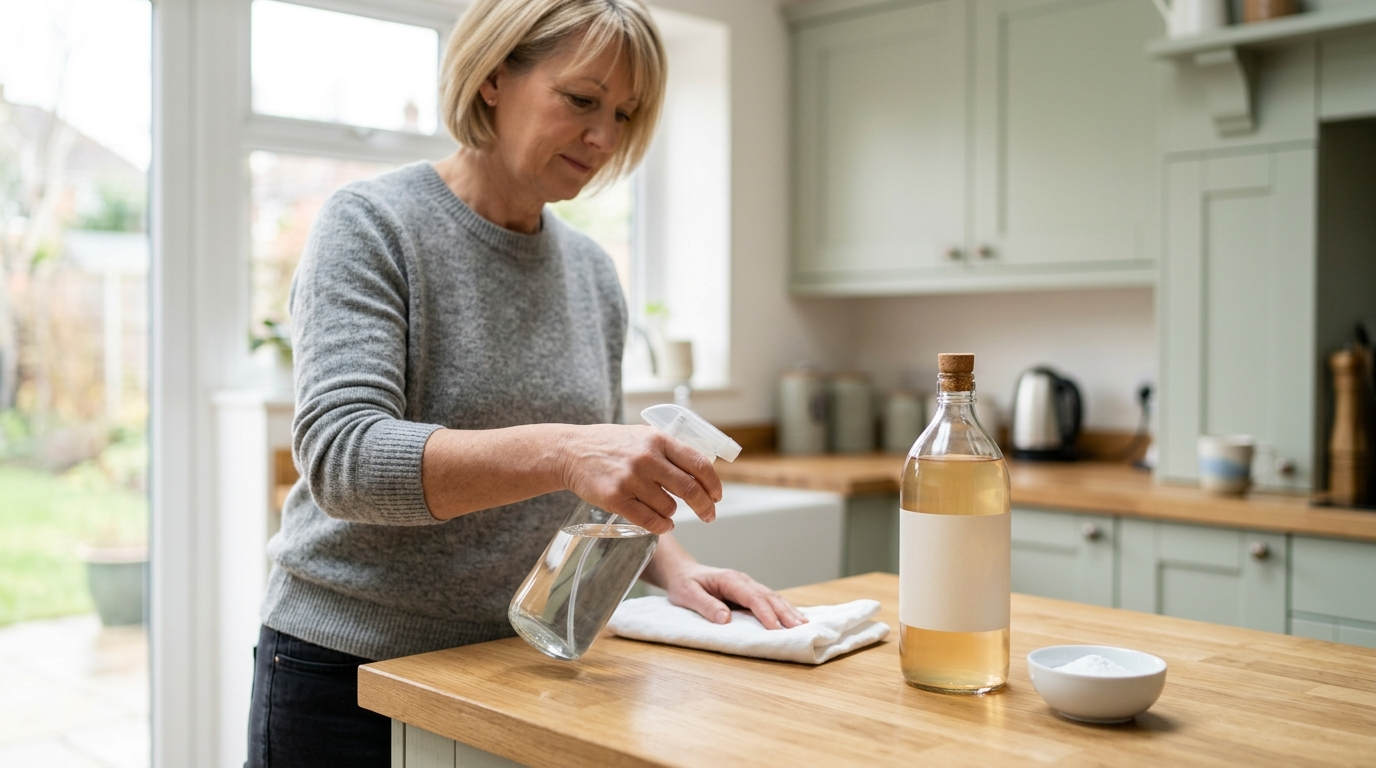
White vinegar is one of the most frequently recommended natural household cleaning agents, praised for its ability to eliminate certain odours without synthetic fragrances or harsh chemicals. In UK homes, it is commonly used as a fabric rinse, a surface cleaner, and a spray deodoriser for everything from pet accidents to kitchen bins. Yet anyone who has used it extensively will have noticed that it works spectacularly well on some smells while having little to no effect on others. This is not a matter of brand quality or application technique. It is a direct consequence of vinegar’s chemical properties and the specific molecular structure of the malodour compounds involved.
The active ingredient in vinegar is acetic acid, typically present at a concentration of 4 to 8 percent in household white vinegar. Acetic acid is a weak carboxylic acid, meaning it donates hydrogen ions (H+) when dissolved in water, but only partially dissociates. Its chemical behaviour in the presence of other molecules determines whether a particular odour will be neutralised, reduced, or entirely unaffected. Understanding this chemistry allows households to use vinegar effectively and avoid frustration when it does not perform as expected (Royal Society of Chemistry, 2020).

This article explains the chemical principles that govern vinegar’s deodorising action, identifies the specific odour types it can and cannot address, and provides practical guidance on when to reach for vinegar and when to choose an alternative method.
The Chemistry of Vinegar: How Acetic Acid Interacts with Malodour Compounds
Acetic acid (CH3COOH) is a weak acid with a pKa of approximately 4.76. In aqueous solution, a small proportion of acetic acid molecules dissociate to form acetate ions (CH3COO-) and hydrogen ions (H+). This partial dissociation means vinegar is acidic enough to participate in acid-base reactions with alkaline compounds, but mild enough to be safe on most household surfaces when properly diluted (Chemistry World, 2021).
Many common malodour compounds are alkaline (basic) in nature. When an acid and a base come into contact, they undergo a neutralisation reaction, forming a salt and water. The salt that results from this reaction is typically non-volatile, meaning it has no detectable odour. By converting a volatile, smelly base into a non-volatile, odourless salt, vinegar effectively removes the source of the smell from the air.
The critical point is that this reaction is chemically specific. An acid neutralises a base. If the target odour compound is not a base, the neutralisation reaction cannot occur, and vinegar will have no chemical mechanism for removing the odour. Any perceived effect in such cases is either physical dilution (the liquid carries some of the compound away) or simple olfactory masking (the sharp scent of vinegar temporarily overpowers the malodour).
Odours Vinegar Can Neutralise: The Alkaline Malodour Compounds
Ammonia-Based Odours (Pet Urine, Animal Waste, Some Cleaning Products)
Fresh pet urine contains urea, which is broken down by bacteria into ammonia (NH3), a highly volatile alkaline compound with a sharp, penetrating odour. Ammonia is a strong base with a pKb of 4.75, meaning it readily accepts hydrogen ions. When vinegar (acetic acid) comes into contact with ammonia, a rapid acid-base neutralisation occurs, producing ammonium acetate (CH3COONH4). Ammonium acetate is a non-volatile salt that has no detectable odour. This is why vinegar is consistently effective at reducing the smell of fresh urine on hard surfaces, in laundry, and on sealed floors (Journal of Environmental Health, 2019).
The key nuance is that this reaction neutralises the ammonia gas, not the underlying uric acid or urea crystals. If the urine has dried and crystallised, the ammonia has already evaporated, leaving behind uric acid and other solid residues. Vinegar will not dissolve or remove these crystals. This is why vinegar can deodorise fresh urine spots but is far less effective on old, dried stains that require enzymatic cleaning to break down the uric acid itself.

Fishy Odours (Trimethylamine)
The characteristic smell of old or cooked fish is primarily caused by trimethylamine (TMA), an alkaline compound produced by bacterial breakdown of trimethylamine N-oxide naturally present in saltwater fish. Trimethylamine is a base with a distinct ammonia-like fishy odour. When vinegar is used in cooking or cleaning fish preparation surfaces, the acetic acid reacts with trimethylamine to form trimethylammonium acetate, a non-volatile salt. This is the chemical basis for the traditional practice of serving fish with malt vinegar or lemon juice (citric acid), which both work through the same acid-base mechanism (Food Chemistry Journal, 2020).
Soap Scum and Mineral Deposits (Not Strictly Odour, but Relevant)
While not an airborne odour, the musty, stale smell associated with bathroom soap scum and limescale is partly due to the accumulation of alkaline mineral deposits. Vinegar dissolves calcium carbonate (limescale) through an acid-carbonate reaction that produces carbon dioxide gas, water, and soluble calcium acetate. By removing the residue that traps moisture and bacteria, vinegar eliminates a substrate that promotes microbial odour production.

Drain Odours (Alkaline Decomposition Products)
Drain smells often result from the decomposition of organic matter trapped in pipes, producing a mixture of alkaline amines and ammonia compounds. Pouring a cup of vinegar followed by boiling water into a drain can neutralise these volatile bases, reducing the odour. The foaming reaction with baking soda (sodium bicarbonate, itself a mild base) is a separate but complementary process: the baking soda reacts with vinegar to produce carbon dioxide gas that physically agitates debris loose, while the remaining vinegar neutralises odour compounds.
Odours Vinegar Cannot Neutralise: The Non-Alkaline Malodour Compounds
Grease and Cooking Oil Odours (Aldehydes, Ketones, and Lipids)
Cooking odours, particularly those from frying, roasting, and grilling, are primarily composed of aldehydes, ketones, heterocyclic amines, and aerosolised lipids. These compounds are not bases. They are neutral or slightly acidic, meaning no acid-base neutralisation reaction can occur with acetic acid. When vinegar is sprayed into the air after cooking, any perceived reduction in grease smell is due to two mechanisms: the sharp, volatile vinegar scent temporarily overwhelms the olfactory receptors (masking), and a small fraction of the airborne grease particles may be physically captured by the water droplets in the spray. Neither mechanism removes or destroys the odour compounds themselves (Analytical Chemistry Journal, 2022).
The practical implication is that vinegar is not an effective solution for lingering kitchen odours in soft furnishings, curtains, or upholstery. The aldehyde and lipid compounds that cause stale kitchen smells are chemically inert to acetic acid. Enzymatic cleaners, activated charcoal adsorption, or mechanical ventilation are required to remove these compounds.

Smoke Odours (Polycyclic Aromatic Hydrocarbons and Phenols)
Tobacco smoke, wood smoke, and smoke from cooking fires contain hundreds of chemical compounds, including polycyclic aromatic hydrocarbons (PAHs), phenols, and cresols. These compounds are predominantly neutral or weakly acidic. Acetic acid has no chemical affinity for them. The smoky, acrid smell of a burnt pan or a fireplace cannot be neutralised by vinegar fogging. The persistent smokiness of a room after a fire requires physical cleaning, ozone treatment, or specialised smoke remediation products.
Sulphur Odours (Hydrogen Sulphide, Mercaptans)
The rotten egg smell from a natural gas leak, stagnant water, or decomposing organic matter is caused by hydrogen sulphide (H2S) and various mercaptans (thiols). Hydrogen sulphide is a weak acid, not a base. Mercaptans are also weakly acidic. No acid-base neutralisation occurs between acetic acid and these compounds. In fact, adding vinegar to a sulphur-smelling drain may temporarily worsen the odour by disturbing stagnant water and releasing trapped gases. Sulphur odours require oxidation (bleach or hydrogen peroxide) or adsorption (activated charcoal) for effective removal.
The same principle applies to the sulfurous odour of boiled eggs or cruciferous vegetables (broccoli, cauliflower, cabbage). These smells come from volatile sulfur compounds such as hydrogen sulphide and dimethyl disulphide, which are chemically unaffected by dilute acetic acid.
Mould and Mildew Odours (Microbial Volatile Organic Compounds)
The musty, earthy smell of mould and mildew is produced by a complex mixture of microbial volatile organic compounds (MVOCs), including geosmin, 1-octen-3-ol, and various terpenes. These compounds are not bases. Vinegar has been shown in some laboratory studies to inhibit mould growth on hard, non-porous surfaces, but it does not neutralise the existing volatile odour compounds. Once mould has grown, the MVOCs have already been released and will persist in the material until the mould colony itself is physically removed and the affected area dried (Building Research Establishment, 2020).

Fresh Paint and Vapour Off-Gassing (VOCs from Solvents)
The smell of fresh paint, varnish, or new furniture comes from volatile organic compounds such as toluene, xylene, and formaldehyde. These are neutral organic solvents. Placing bowls of vinegar in a freshly painted room, a widely circulated folk remedy, has no chemical effect on the concentration of these VOCs. Any perceived reduction in paint smell is psychological or due to the olfactory system adapting to the presence of a new strong scent. The only reliable method for reducing paint VOCs is ventilation (increasing the air exchange rate) and time.
When to Use Vinegar: A Practical Decision Guide
Based on the chemical evidence above, vinegar is an effective, low-cost deodoriser for a specific subset of household odours. Use this guide to determine when it is worth trying and when another approach will be more effective.
| Odour Source | Primary Chemical Class | Vinegar Effective? | Better Alternative |
|---|---|---|---|
| Fresh pet urine | Ammonia (base) | Yes, on fresh wet stains | Enzymatic cleaner for dried stains |
| Fish preparation smells | Trimethylamine (base) | Yes | Lemon juice (citric acid) also works |
| Frying and cooking oil | Aldehydes, ketones (neutral) | No | Ventilation, activated charcoal, enzymatic spray |
| Tobacco or wood smoke | PAHs, phenols (neutral/acidic) | No | Ozone treatment, HEPA filtration, deep cleaning |
| Rotten egg (sulphur) | Hydrogen sulphide (weak acid) | No | Oxidation (peroxide), activated charcoal |
| Mould and mildew | MVOCs (various) | No | Remove mould, dry area, improve ventilation |
| Drain odours | Mixed amines (partly basic) | Partial | Enzymatic drain cleaner, mechanical cleaning |
| Limescale mustiness | Calcium carbonate (alkaline) | Yes | Commercial descaler (typically also acid-based) |
Safety Considerations When Using Vinegar for Odour Control
While white vinegar is generally safe for household use, there are several important caveats to consider. Vinegar should never be mixed with bleach (sodium hypochlorite), as the combination produces toxic chlorine gas. It should also not be mixed with hydrogen peroxide, as the reaction can produce peracetic acid, a potent irritant to the respiratory system. On surfaces, vinegar can etch natural stone such as marble, limestone, and granite because the acid dissolves the calcium carbonate in the stone. It can also damage unsealed grout, wood finishes, and certain synthetic fabrics over repeated exposure (UK Health and Safety Executive, 2023).
When using vinegar as a laundry rinse (approximately 100ml added to the fabric softener compartment in a standard machine), there is no risk of damage to cotton, polyester, or nylon fabrics at typical dilution ratios. However, it should not be used on silk or wool because the acid can degrade protein-based fibres over time.
Frequently Asked Questions
Does boiling vinegar clean the air?
Boiling vinegar releases acetic acid vapour into the air, which may reduce airborne alkaline compounds such as ammonia through acid-base neutralisation. However, the effect is limited to basic odours only. The acetic acid vapour itself is a respiratory irritant at high concentrations, and prolonged inhalation can cause coughing and throat discomfort. The UK Health and Safety Executive recommends against deliberate indoor fogging with acetic acid. Ventilation remains the safest and most effective air purification method.
Why does my laundry smell like vinegar after I use it?
Vinegar used as a laundry rinse typically leaves no residual odour once the fabric is dry, because acetic acid is highly volatile and evaporates during the spin and drying cycles. If a vinegar smell remains on dry laundry, the dosage may be too high for the machine size, or the fabric may be particularly thick (towels, denim) and retaining moisture. Reduce the quantity to 50ml or switch to a commercial laundry freshener.
Can I use vinegar to remove the smell of vomit from carpets?
Vomit contains a mixture of stomach acid (hydrochloric acid), partially digested food, and bile salts. The odour is complex, involving both acidic and basic compounds. Vinegar will neutralise any alkaline components such as ammonia from bile, but it will not address the acidic compounds or the organic residue. An enzymatic cleaner is more effective because it digests the organic matter itself. If using vinegar, blot first to remove bulk residue, apply a diluted vinegar solution (one part vinegar to three parts water), then follow with an enzymatic treatment.
Does the type of vinegar matter (white, malt, apple cider)?
For odour neutralisation, white distilled vinegar is the most practical choice because it contains a consistent concentration of acetic acid (typically 5 percent) without added colour, sugar, or flavour compounds. Malt vinegar contains additional organic compounds from the brewing process, which can leave a residual food-like scent. Apple cider vinegar contains sugars and other organic acids that may attract insects or leave a sticky residue on surfaces. White vinegar is chemically the most predictable option for cleaning and deodorising.
How long does it take for vinegar to neutralise an odour?
The acid-base neutralisation reaction between acetic acid and volatile bases is essentially instantaneous at the molecular level. The practical time required to perceive a reduction in odour depends on how quickly the vinegar solution contacts the odour-causing compound. On hard surfaces, the effect is immediate. In laundry, the full effect is noticeable after the wash and dry cycle. In the air, the effect is minimal because the volume of acetic acid vapour required to neutralise airborne alkaline compounds is impractically large for domestic fogging.
Summary: Vinegar Is an Acid-Base Tool, Not a Universal Deodoriser
White vinegar is a valuable household deodoriser with a specific chemical function. It reliably neutralises alkaline malodour compounds, particularly ammonia and trimethylamine, through acid-base chemistry. For fresh pet urine, fish preparation smells, and limescale-related mustiness, it is an effective, low-cost, and environmentally low-impact solution.
However, vinegar has no chemical effect on neutral or acidic odour compounds, which include grease and cooking odours, smoke, sulphur compounds, and microbial volatile organic compounds. Using vinegar on these odours is unlikely to produce meaningful results and may delay the application of genuinely effective treatments. For these categories, the appropriate approach is either physical removal (cleaning, ventilation), adsorption (activated charcoal), enzymatic digestion, or oxidation, depending on the specific compound.
Understanding this distinction transforms vinegar from a hit-or-miss folk remedy into a predictable, chemically rational tool. The question is not whether vinegar works for odour control. The question is which odour, and the answer is determined by a single chemical property: whether the malodour compound is a base.